Fire protection systems only work when they’re maintained, and that starts with regular inspections. Our fire sprinkler inspections cover every critical component on your property: sprinklers, alarms, extinguishers, backflows, and hydrants. The result is a year-round picture of where you stand on compliance and what (if anything) needs to be corrected before your AHJ asks.
Licensed inspections and reports you can hand the fire marshal
Sprinkler inspection work in Texas is regulated by the State Fire Marshal’s Office: the company holds a Fire Sprinkler Certificate of Registration and the work runs under a licensed Responsible Managing Employee. Paragon carries both, and you can verify either one in TDI’s fire industry licensee search before we set foot on your property.
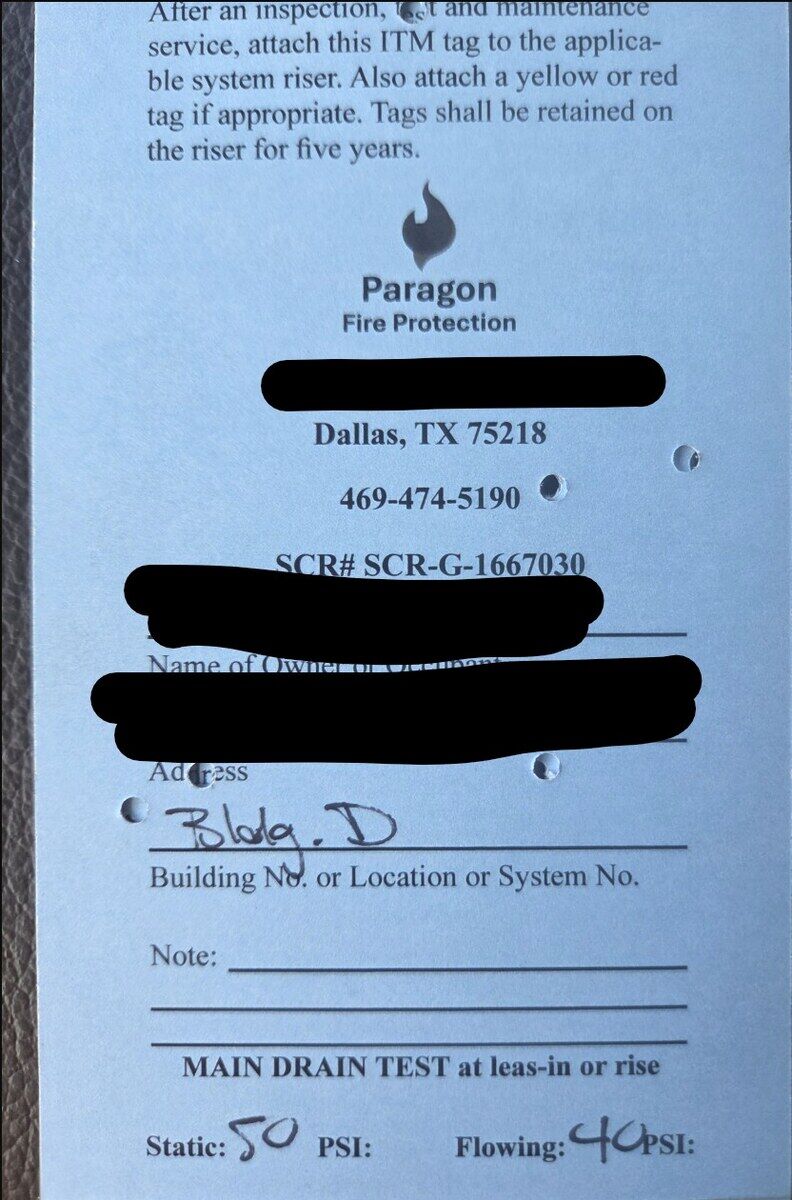
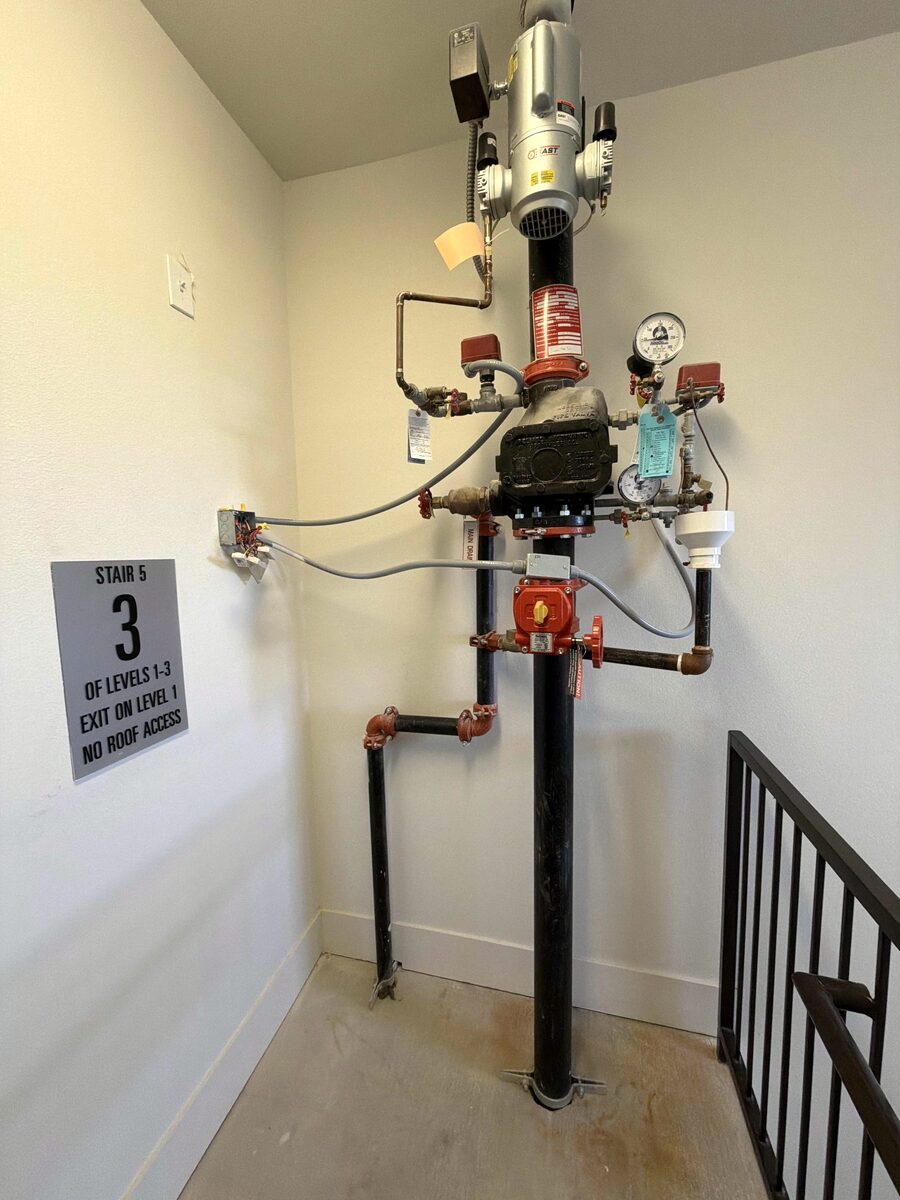
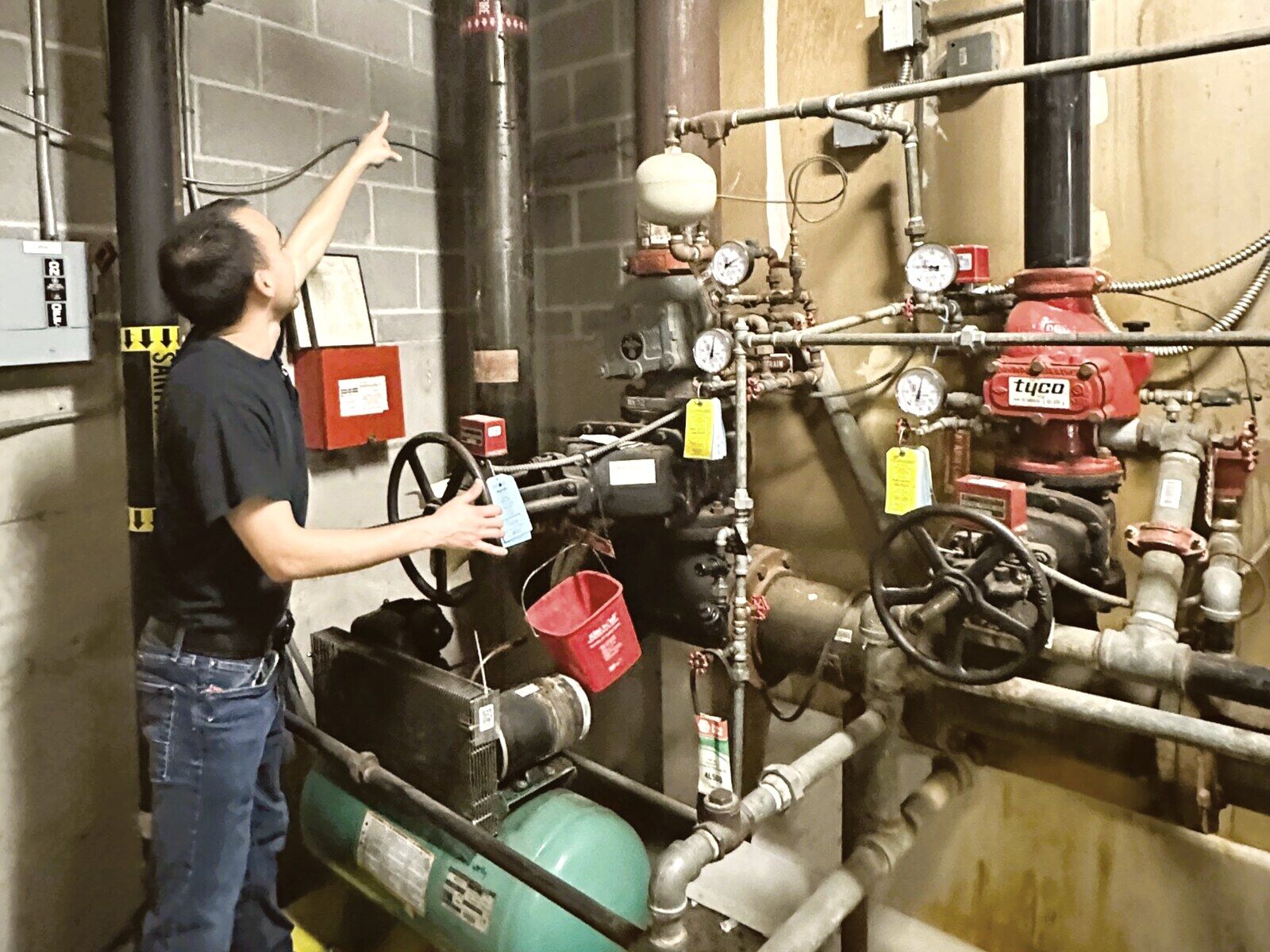
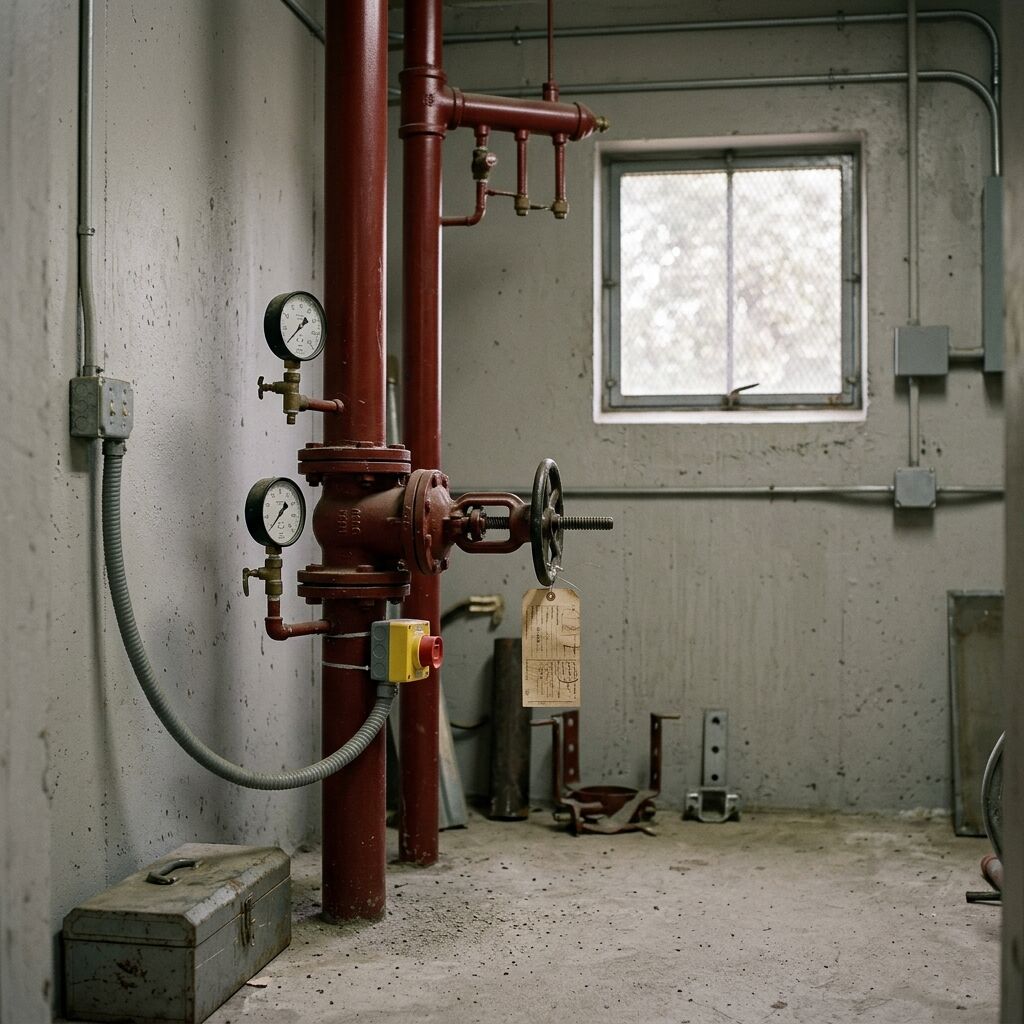
The tag on your riser tells the same story. A Texas ITM visit leaves a light-blue service tag; a deficiency earns a yellow tag; an impairment that takes the system out of service gets a red one. When we restored a yellow-tagged dry system in Irving (unlisted compressor, gunky valve internals), the job wasn’t done until the AHJ hung a blue tag back on the riser. That’s the bar for every inspection we run: a report the fire marshal signs off on, not a sticker and an invoice.
What NFPA 25 requires, and when
NFPA 25 is a frequency matrix, not a single annual visit. The annual inspection is the anchor: a floor-level check of every visible sprinkler head, pipe, hanger, and seismic brace, plus the main drain test. Between annual visits sit the shorter tiers — gauges and control valves monthly, water motor gongs quarterly, vane and pressure-switch waterflow devices semiannually. Dry systems add a partial trip test every year and a full-flow trip every third year, scheduled in warm weather. At the five-year mark comes the internal assessment of the piping and gauge replacement or recalibration, and private hydrants get flushed and lubricated annually along the way.
Our guide to NFPA 25 inspection requirements walks each tier in detail, including the deficiencies DFW fire marshals write up most: closed valves, painted heads, and skipped five-year work. We track the full matrix per system, so the schedule is our problem instead of yours.
One visit covers every system
Sprinklers are half the walkthrough. The same visit covers fire alarm testing: functional tests annually under NFPA 72, visual checks of devices and batteries semiannually, and smoke detector sensitivity testing on the cycle the standard sets. Fire extinguishers get their annual NFPA 10 maintenance from a licensed technician; the monthly visual check is one your own staff may do in-house, and we set up the log so it holds up when the fire marshal asks for twelve months of records. Backflow assemblies on fire lines are their own wrinkle in Texas: DFW water purveyors require an annual test, and the tester must be TCEQ-licensed and employed by a registered sprinkler contractor — which is exactly what we are, so the same crew handles it.
One report, every system, one renewal calendar.
Electronic filing where your city requires it
A growing list of DFW cities, Fort Worth and Irving among them, no longer accept paper: third-party inspection reports are filed by the contractor through The Compliance Engine. We file same-day, track any deficiency in the portal until it clears, and keep electronic inspection reports off your desk entirely. Extinguisher records are the exception — TCE doesn’t take them — so we tag the units and leave the canonical copy on-site, where the inspector expects to find it.
Every system on your property runs on a different clock. Our job is making them read like one.