
Commercial Fire Pumps: What NFPA 20 and NFPA 25 Require
When a commercial building needs a fire pump, how a skid-mounted install works under NFPA 20, and the NFPA 25 test schedule fire marshals enforce.
By Paragon Fire Protection 7 min read
Most commercial buildings run their sprinklers straight off city water pressure. Some can’t: the building is too tall, the hazard is too big, or the main is too weak, and the system needs a pump behind it. This is the plain-English version for property managers: when a building needs a fire pump, what a skid-built installation looks like, and the test schedule that keeps the pump ready.
NFPA 20 is the standard for installing a fire pump. NFPA 25 takes over the day it goes into service, the same split the sprinkler system itself lives under.
When a building needs a fire pump
A sprinkler or standpipe system has a demand: so many gallons per minute at so much pressure, set by the hazard it protects. The water supply either meets that demand or it doesn’t. The math starts with a hydrant flow test on the street, and when the supply comes up short, the design needs a pump.
The usual suspects: high-rise buildings, where every foot of height costs about 0.43 psi and the top floors starve first; warehouses with rack storage, where the design demand outruns the main; and buildings at the weak end of a municipal line. One thing a pump cannot do is make water. It raises pressure, not volume, so if the supply can’t deliver the flow, the answer is a storage tank, not a bigger pump.
Every fire pump installation also carries a second, smaller pump: the jockey. It holds the system at pressure so pressure drift and minor leaks don’t wake the main pump. The start points stagger so the jockey always responds first and the fire pump starts only on real demand, an open sprinkler rather than a weeping fitting. A jockey pump that cycles constantly means the system is leaking somewhere, and it’s one of the cheapest warnings a building ever gets.
NFPA 20 rates pumps at standard capacities from 25 to 5,000 gpm, and the type follows the site:
| Pump type | Where it fits |
|---|---|
| Horizontal split-case | The big-building workhorse. High capacities, easy to service, needs the most floor space. |
| Vertical in-line | Mounts directly in the pipe run, smallest footprint. A common pick in the few-hundred-gpm range where the pump room is tight. |
| End suction | Compact, lower capacities. |
| Vertical turbine | The only type allowed to lift water from below grade: tanks, ponds, wells. |
What a skid-mounted installation looks like
NFPA 20 allows the whole pump package to be assembled away from the site: the fire pump, the jockey pump, both controllers, and the trim mounted and piped on one steel skid in a shop, then delivered and set as a unit. The packaged assembly meets the same requirements and passes the same acceptance test as a pump built up piece by piece in the room.
We build ours to order. On a recent retail project the demand worked out to 300 gpm with a 50 psi boost, one of NFPA 20’s standard ratings, so the package went together around a vertical in-line pump: pump and jockey on a 72-by-34-inch steel skid, both controllers mounted, the OS&Y gate valve on suction and the check valve on discharge already piped before the truck left the shop. The engineering, the skid drawings, the city submittal, and the installation were one scope under one roof.
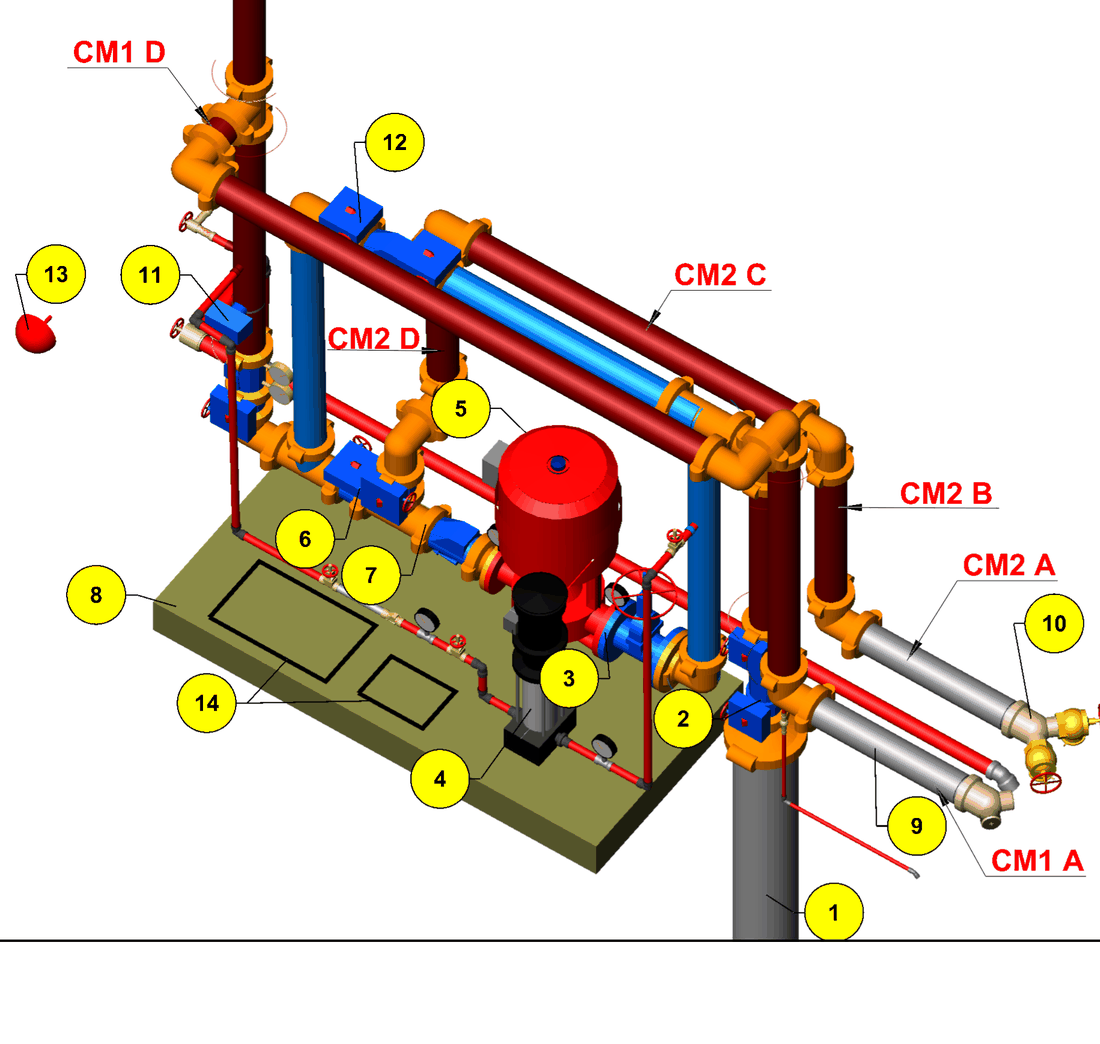
Field work then shrinks to setting the skid, tying the suction side to the underground supply through the double check detector (the backflow assembly on the fire line), connecting the discharge, and running the test header with its hose valves out to the wall. Fewer joints made up in the field, less time with the system drained, and the fire marshal reviews one engineered package instead of a room full of loose parts.
Before the pump goes into service, NFPA 20 requires a field acceptance test: flush and hydrostatically test the new piping, then flow the pump at churn (no flow), 100 percent, and 150 percent of rated capacity. The AHJ gets notified, and the fire marshal typically comes out to watch. The curve from that day becomes the baseline every future annual test is measured against, so keep the report.
The NFPA 25 test schedule
Once the pump is in, NFPA 25 Chapter 8 sets the cadence. Texas adopts the editions statewide for sprinkler work, currently NFPA 20 (2019) for installation and NFPA 25 (2020) for upkeep, so this is the schedule your inspector works to.
| How often | What happens | Who |
|---|---|---|
| Weekly | Walk the pump room: heat above 40°F (70°F for a diesel room without an engine heater), suction and discharge valves open, piping dry, gauges normal, controller pilot lights on, coupling guard in place. | On-site staff or technician |
| Weekly or monthly | The no-flow “churn” test. Diesel pumps run weekly for 30 minutes. Electric pumps run 10 minutes, monthly for most. | Trained staff or technician |
| Annually | Full flow test at churn, 100 percent, and 150 percent of rated capacity, compared against the acceptance curve. | Licensed inspector |
| Every visit | A state ITM tag goes on the equipment and the report gets filed. | Licensed firm |
Two of these trip people up.
The churn cadence depends on the driver. A diesel pump runs every week of the year, and the weekly run also checks the engine side: batteries, charger, oil, coolant, fuel level. Electric pumps have qualified for monthly runs since the 2017 edition, with exceptions that stay weekly: vertical turbine pumps, pumps with limited-service controllers, pumps drawing from a non-pressurized source, and pumps serving buildings taller than the fire department can reach with its own trucks. Whoever runs the test records the start pressure, checks the packing glands for the slight drip they’re supposed to show, and listens for anything new.
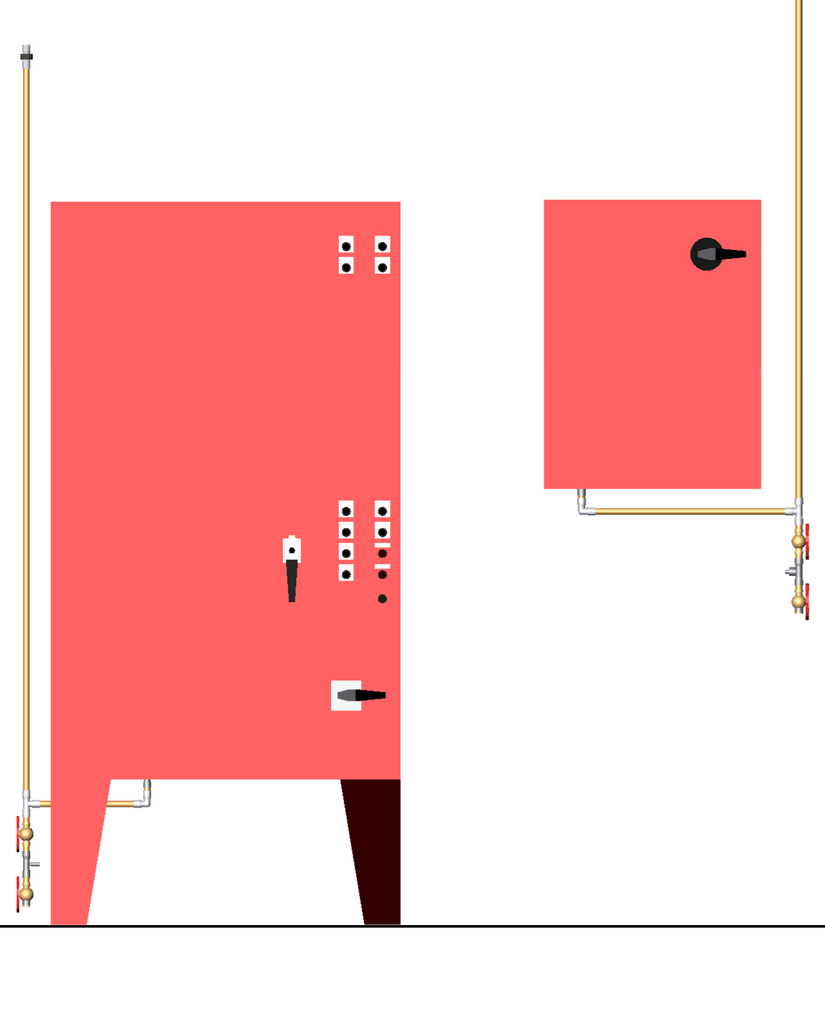
The annual flow test is the real exam. A licensed inspector flows the pump at the same three points as the acceptance test, through the test header or a flow meter, and lays the results over the original curve. Below 95 percent of the original performance, NFPA 25 requires an investigation into why. That’s how a worn impeller, a partly closed suction valve, or an obstructed line gets found while it’s still a scheduled repair instead of a yellow tag. The cadence itself lives under the same system inspections and preventative maintenance programs as the rest of the sprinkler system.
Who’s allowed to work on a fire pump in Texas
In Texas, a fire pump serving a sprinkler system is sprinkler work, regulated by the State Fire Marshal’s Office at the Texas Department of Insurance under Texas Insurance Code Chapter 6003. The company holds a Sprinkler Certificate of Registration (SCR), and the responsible individual holds an RME-General license (plan, install, service, certify) or an RME-General Inspector license, which covers inspection, testing, and maintenance only. Your own staff can do the weekly walk and, with training, run the churn test. The annual flow test and any repair comes from a licensed firm, and every regulated service visit leaves a state ITM tag with the firm’s license number and the date. A pump with no tag is a pump with no history.
City fire marshals enforce the schedule through the International Fire Code, which points to NFPA 25 and wants ITM records kept for at least three years. Some cities, Fort Worth and Irving among them, now want the reports filed electronically. We file the same day the test wraps.
A fire pump is the one part of the system that has to wake up and do work in a fire, and it’s also the part most likely to sit untested behind a locked door. The weekly walk takes ten minutes. The churn run takes ten or thirty. The annual test takes a morning. Buildings that lose their pump in a real event almost never lost it that day. They lost it a year earlier, when the room went cold or a valve stayed closed and nobody was looking.
Talk to an Expert
Call (469) 474-5190 anytime for emergencies.
More Posts
Read next
-
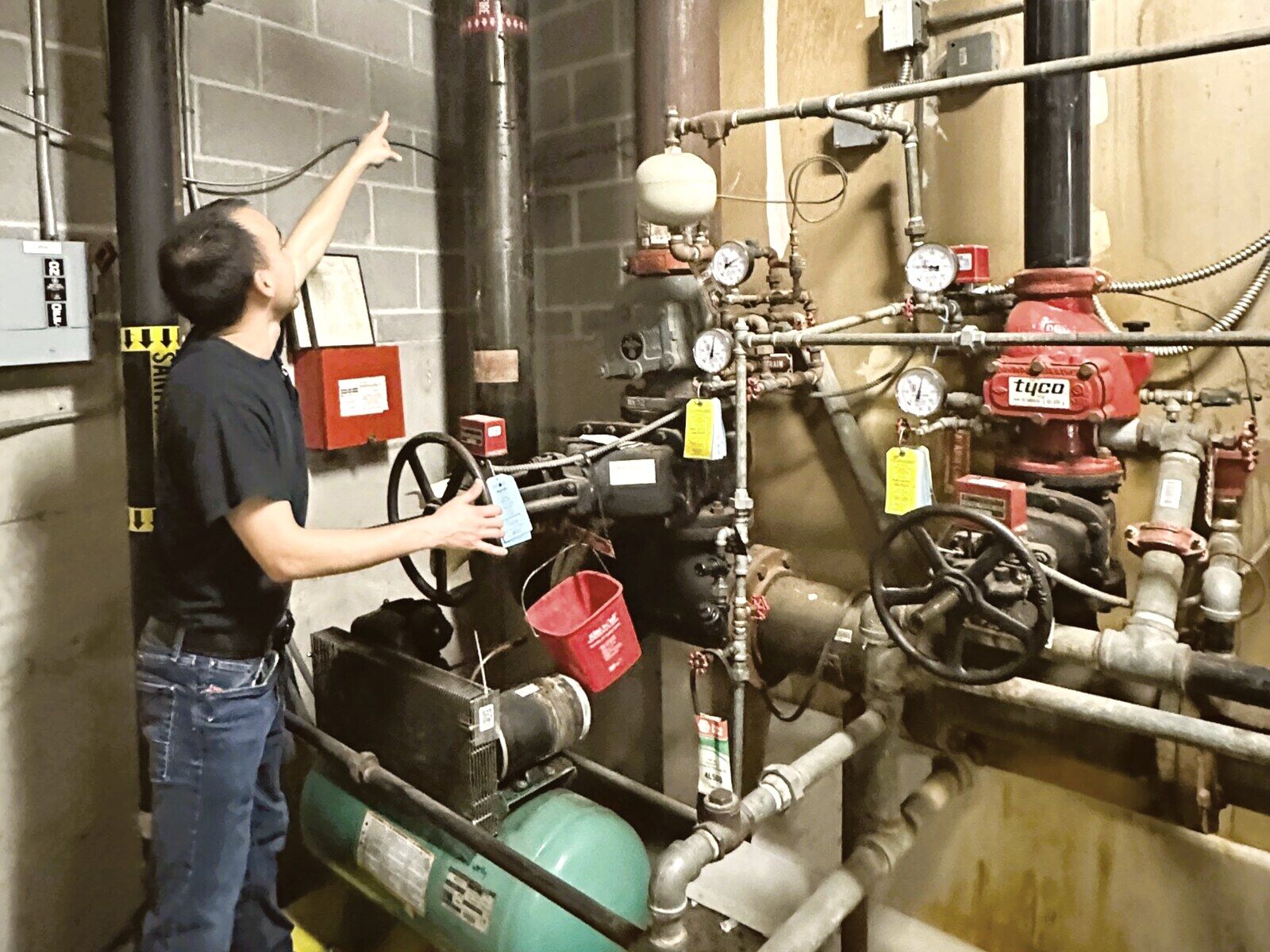
Fire Sprinkler Inspection: What NFPA 25 Requires and When
Wet, dry, and preaction systems explained, plus the weekly-to-5-year NFPA 25 inspection and testing schedule DFW fire marshals actually check.
-
Commercial Fire Extinguisher Types and NFPA 10 Inspection Requirements
ABC dry chemical, Class K wet chemical, CO2, clean agent, water mist. What each fights and the NFPA 10 service intervals DFW fire marshals check.