Commercial Fire Extinguisher Types and NFPA 10 Inspection Requirements
ABC dry chemical, Class K wet chemical, CO2, clean agent, water mist. What each fights and the NFPA 10 service intervals DFW fire marshals check.
By Paragon Fire Protection 11 min read
Updated
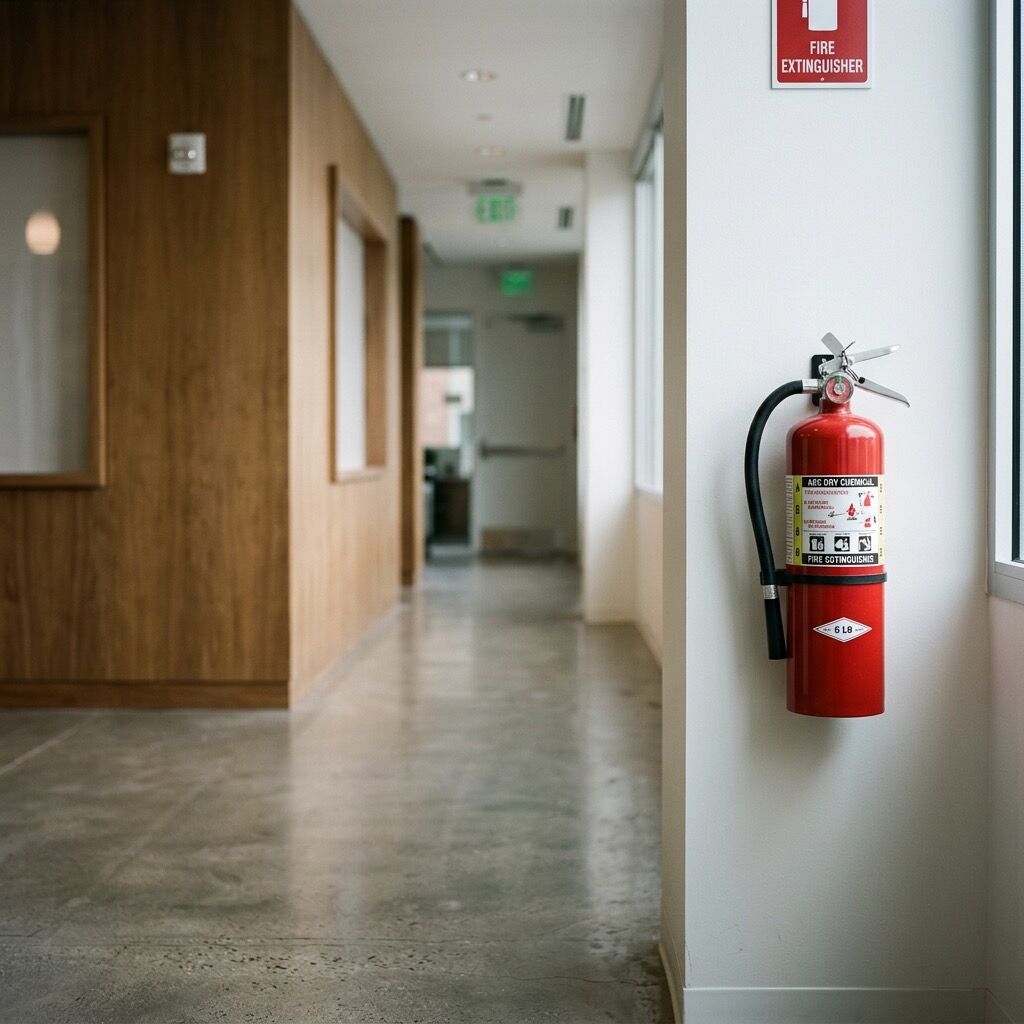
Most commercial buildings carry three or four different types of portable fire extinguishers. Property managers usually find out which is which only when an inspector flags a deficiency. This reference covers each type, where it belongs in your building, and the NFPA 10 service cadence DFW fire marshals check on inspection.
The five fire classes
NFPA 10 sorts portable extinguishers by the type of fire they fight. Most buildings carry more than one class because different rooms have different fuel loads.
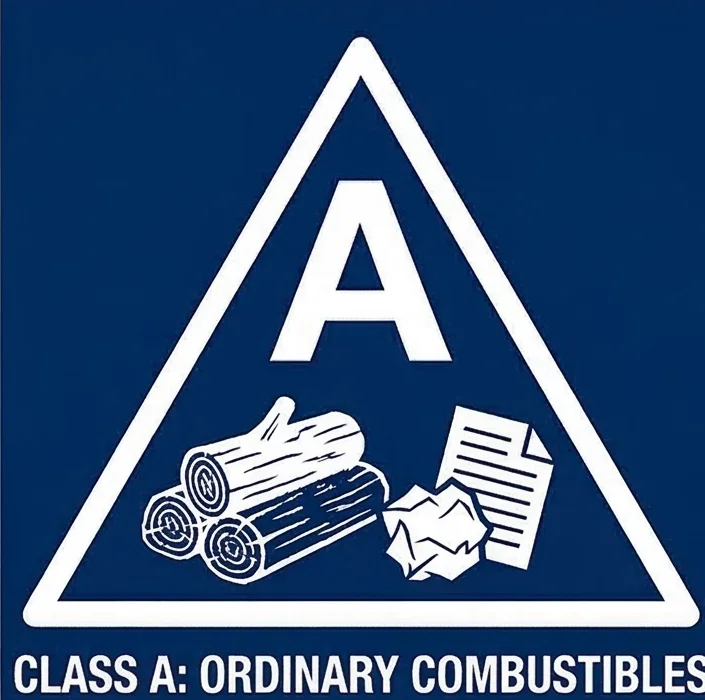 UL 711 Class A fire rating tests and ABC dry chemical extinguishers
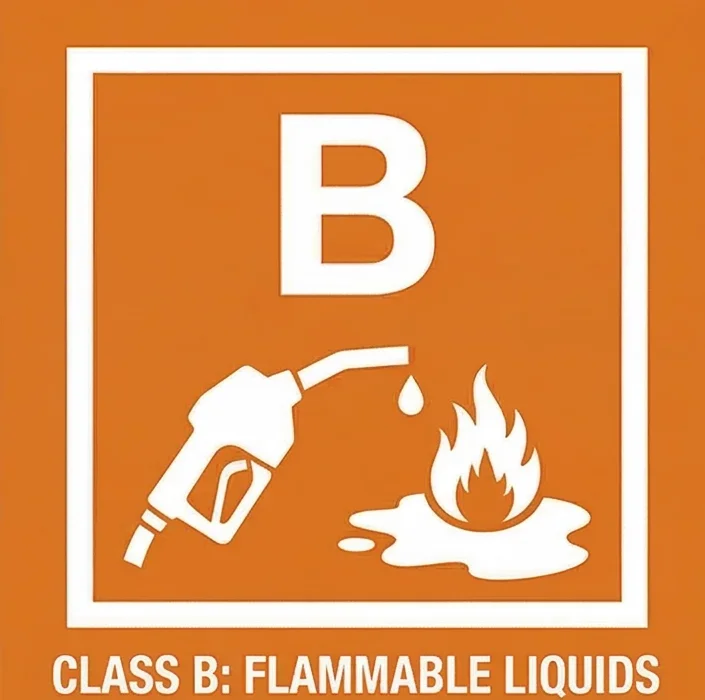 Class B extinguishers for flammable liquids and fuels
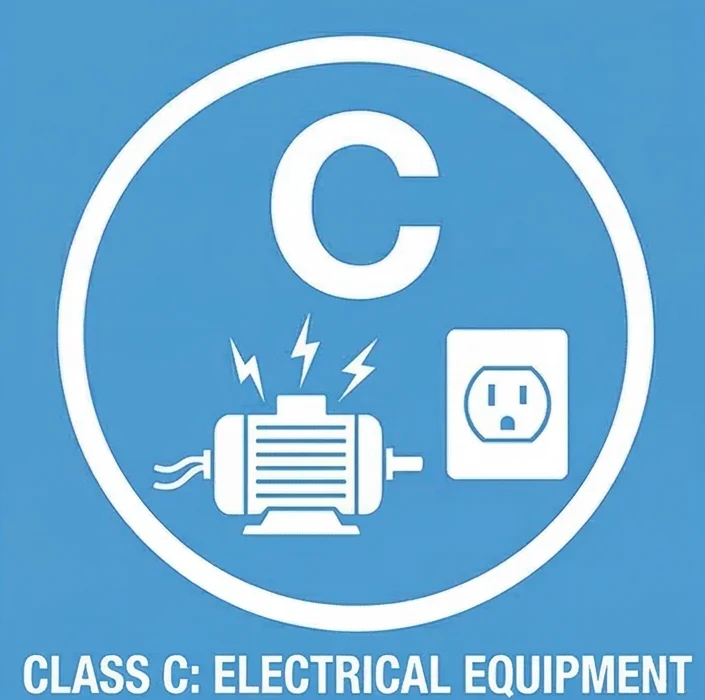 Class C extinguishers for server rooms and energized electrical equipment
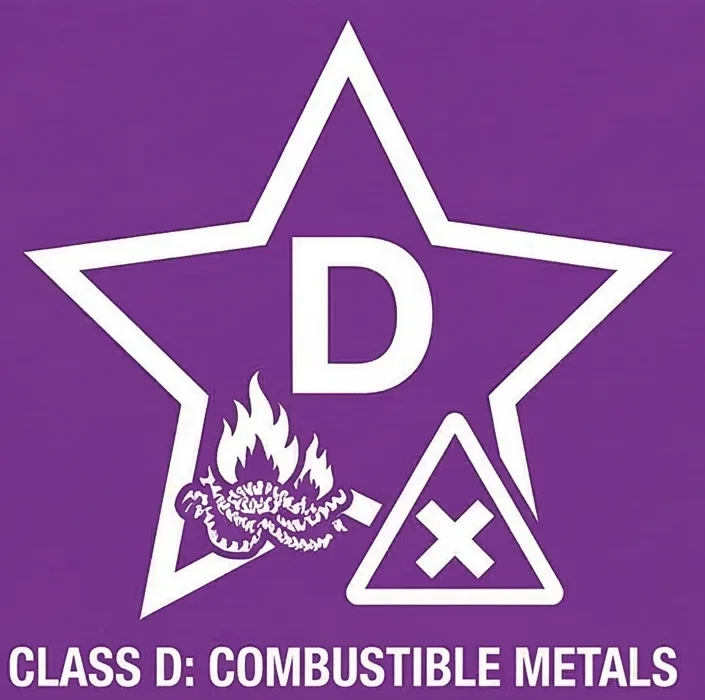 NFPA 10 Class D combustible-metal extinguisher placement
 Class K wet chemical extinguishers for commercial kitchens
- Class A. Ordinary combustibles: wood, paper, fabric, most plastics. Offices, warehouses, retail floors.
- Class B. Flammable liquids and gases: gasoline, paint, solvents, propane. A Class B fire extinguisher is marked with a numerical rating like 10-B and belongs in maintenance rooms, parking garages, and storage areas.
- Class C. Energized electrical equipment. A Class C fire extinguisher belongs in server rooms, electrical panels, and IT closets.
- Class D. Combustible metals: magnesium, titanium, sodium. Rare outside industrial shops and laboratories. Common in DFW aerospace and EV-battery work.
- Class K. Cooking oils and fats. Required wherever there’s a commercial kitchen with a Type I hood, per NFPA 96.
A single extinguisher can be rated for more than one class. Most commercial buildings use multi-class units. The inspection schedule still depends on the agent inside the canister.
Inspection cadence and Texas licensing at a glance
Every portable extinguisher follows a three-tier cycle. The intervals on the longer-cycle work depend on the agent inside the canister. The licensing required to do the work depends on Texas law.
The three-tier cycle
- Monthly visual inspection. Performed by the building owner or designated staff. Confirm the extinguisher is in its designated location, fully charged (gauge in the green for stored-pressure units, correct weight for CO2 and clean-agent), unobstructed, with a legible tag and intact safety seal. Log on the back of the tag or in an electronic record.
- Annual maintenance. Performed by a licensed technician (see below). Each extinguisher comes off the wall. The technician inspects the hose and nozzle, verifies gauge accuracy, checks the tamper seal, confirms the service tag and inspection record, and documents any deficiencies. A new service tag goes on the unit. When the annual catches a problem, like a gauge that has drifted below the green band, the unit comes back to the shop for a recharge and a fresh tag, then goes back on the wall. Most DFW AHJs expect the record to be available on-site at inspection, and an inspector-side walkthrough covers what they actually verify.
- Internal examination and hydrostatic testing. Longer-interval requirements that vary by extinguisher type. Hydrostatic testing on DOT-specification cylinders requires a Texas Type C Hydrostatic Testing Registration. Most service firms (Paragon included) ship cylinders to a partner station that holds the Type C registration, then return the unit to service with a new test date stamped on the shell.
Cadence by extinguisher type
The 6-year internal exam and the 12-year hydrostatic test are the two most-commonly-missed obligations:
| Type | Internal exam | Hydrostatic test | Replacement |
|---|---|---|---|
| ABC dry chemical (stored-pressure) | 6 years | 12 years | — |
| Halocarbon clean agent | 6 years | 12 years | — |
| Class K wet chemical | At hydro | 5 years | — |
| CO2 (carbon dioxide) | At hydro | 5 years | — |
| Water mist / water / foam | At hydro | 5 years | — |
| Non-rechargeable disposable | n/a | n/a | 12 yrs from manufacture |
The internal exam happens separately from the hydro test only for stored-pressure units on a 12-year hydro interval (ABC dry chemical, halocarbon clean agent). For everything else, the internal inspection happens at the 5-year hydro.
Class K extinguishers also get an annual service cross-check with the hood’s UL 300 suppression system. NFPA 96 references both. Restaurants often miss the connection.
Texas licensing required to do this work
Annual maintenance, internal exams, and hydrostatic testing on portable fire extinguishers can’t be done by just anyone in Texas. The Texas State Fire Marshal’s Office (SFMO), administered by the Texas Department of Insurance (TDI), licenses both individual technicians and firms under Texas Insurance Code Chapter 6001 — Fire Extinguisher Service and Installation and 28 TAC Chapter 34, Subchapter E. The SFMO publishes a Fire Extinguisher Registration, License, and Test guide defining each license category.
Individual technician licenses (per the SFMO guide):
| License | Permitted to |
|---|---|
| EPL — Planning | Plan, install, certify, or service fixed fire extinguisher systems. Also permitted to sell, install, certify, or service portable fire extinguishers. |
| FEL-A — Fixed System (Type A) | Install, certify, or service all pre-engineered fixed fire extinguishing systems and portable extinguishers. |
| FEL-K — Kitchen Cooking Systems (Type K) | Install, certify, or service any pre-engineered fixed fire extinguishing systems used to protect a cooking area, and portable extinguishers. |
| FEL-B — Portable Fire Extinguisher (Type B) | Install, certify, or service portable fire extinguishers, and test DOT non-specification portable fire extinguishers. |
| EAP — Apprentice Permit | Install or service fixed fire extinguishing systems and portable fire extinguishers under the direct visual supervision of a valid licensee. |
Firm/company registrations (the licensed individuals above must work under a registered firm):
- Certificate of Registration (Main Office). Required for any company in the business of installing, certifying, or servicing portable or fixed extinguisher systems. The work scope a firm can perform follows from the licenses its employees hold.
- Branch Office Certificate of Registration. Required for each separate office location that performs the same business as the main office.
- Type C Hydrostatic Testing Registration. Required for a company with a DOT requalification number to hydrostatically test DOT-specification fire extinguisher cylinders.
Paragon’s technicians carry the FEL-B license required to install, certify, and service portable fire extinguishers, working under the firm’s Certificate of Registration. Hydrostatic testing on DOT-specification cylinders is coordinated through a partner station that holds the Type C Hydrostatic Testing Registration.
What’s actually in your building
These are the types we see most often during DFW commercial inspections.
ABC dry chemical (multi-class)
The default unit for general commercial use. Rated for Class A, B, and C fires. Stored-pressure design with a gauge on the valve. You’ll find them mounted near elevators, in corridors, at warehouse pillars, and by employee exits. The same units ride in work trucks: fleet DOT compliance rules require commercial vehicles to carry a securely mounted extinguisher rated at least 5 B:C, and roadside inspectors check for it.
Class K wet chemical
Mounted on the wall within reach of the cookline, alongside the hood’s automatic suppression system. The Class K extinguisher is a separate compliance item from the hood system itself. Both need annual service. Many DFW restaurants don’t realize this until an inspector points it out.
NFPA 96 also requires a placard near every Class K extinguisher: use only after the fixed system has actuated.
CO2 (carbon dioxide)
A CO2 fire extinguisher is heavy, has no pressure gauge (it’s weighed instead), and leaves no residue. Common in server rooms, switchgear rooms, electrical closets, and laboratories where dry-chem powder would damage equipment. Rated for Class B and C. Not rated for Class A. On a flammable-liquid hazard, deciding CO2 vs Purple K for Class B fires comes down to whether energized electronics are in the mix.
Clean agent (halocarbon)
Used in the same rooms as CO2 when the property prefers a non-conductive agent that’s lighter and easier to deploy. A portable Halotron fire extinguisher is typically rated A:B:C, so it covers the ordinary-combustible risk that CO2 misses; Halotron I and Ansul Cleanguard (which uses Chemours FE-36) are the units we see most. Higher upfront cost; preferred for sensitive electronics where weight and cleanup matter.
Water mist
Distilled water in a stored-pressure cylinder. Non-conductive, no residue, A:C rated. Common in hospitals, operating rooms, MRI suites, telecom, and cleanrooms. Worth knowing about for DFW healthcare and data-center clients.
Water / foam
Less common in modern commercial settings except for specialized applications such as fuel storage or large open spaces. Plain water is Class A only. AFFF foam covers Class A and B but is being phased out: the Department of Defense transition deadline is October 2026, the EU bans PFOA-based foams by December 2025, and many states have moved to fluorine-free foam (F3). Insurers and franchises may already require F3 even where Texas law does not. With AFFF under growing PFAS restrictions, many facilities are moving to PFAS-free Class B extinguishers like CO2 and Purple K.
Non-rechargeable disposable
Small canisters, typically 2.5 lb ABC, sold for residential or light-commercial use. NFPA 10 requires them to be removed from service 12 years from the manufacture date. They cannot be hydro-tested or recharged.
Class D dry powder
Sodium chloride, copper, or graphite agents for combustible-metal fires. NFPA 10 requires a Class D extinguisher within 75 ft of any combustible-metal hazard: machine shops, aerospace, EV/battery facilities, labs working with sodium, potassium, lithium, magnesium, or titanium.
Placement and mounting
Two NFPA 10 placement rules generate the most citations in DFW:
- Travel distance. Class A: maximum 75 ft from any point in the building. Class B: 30 or 50 ft depending on hazard rating. Class K: 30 ft from cooking appliances.
- Mounting height. Units up to 40 lb: top of extinguisher no higher than 5 ft from the floor. Heavier units: top no higher than 3.5 ft. Bottom at least 4 in off the floor.
If the unit isn’t in plain sight, NFPA 10 requires signage.
NFPA 10 doesn’t require a cabinet. A bracket made for that extinguisher and mounted securely is a compliant mount, and anywhere the unit could get knocked loose takes a strap-type bracket. A fire extinguisher cabinet is worth it in public corridors where units get tampered with, at loading docks where they get hit, and on outside walls. In a hallway or lobby, many surface-mounted cabinets stick out more than the 4 in the ADA allows, so those spots get a recessed or semi-recessed cabinet that stays within 4 in.
Travel distance is also the citation that costs the most to fix one unit at a time. When an AHJ flagged a facility running too few extinguishers spaced too far apart, the fix was a mapped, full-facility cabinet build-out: coverage plotted by hazard zone, the right class in each spot, every unit tagged and documented.
What Paragon handles vs what’s coordinated externally
- Monthly visual checks. Your in-house responsibility. We can train your staff on what to look for and supply the documentation cadence.
- Annual inspection and tag service. Handled directly by our FEL-B technicians during your scheduled service visit.
- 6-year internal examination. Handled directly. We pull, disassemble, inspect, and document each affected unit, then return it to service with a new tag.
- Hydrostatic testing. Coordinated, not performed in-house. We collect the cylinders, ship them to a certified hydro test station, and return them to service after testing. Cylinders that fail are condemned per NFPA 10.
What DFW fire marshals flag most often on extinguisher inspections
In our experience across Carrollton, Dallas, and Fort Worth commercial inspections, deficiencies cluster around the same issues:
- Annual service tag missing, expired, or illegible.
- 6-year internal examination overdue. Easy to miss because monthly and annual visuals don’t surface it.
- Hydrostatic test date past expiration.
- Extinguisher mounted too high or blocked by stored material.
- Class K extinguisher missing from a commercial kitchen.
- No separate kitchen-hood inspection record on file.
A note on Carrollton’s electronic-reporting mandate: The Compliance Engine (TCE) requirement covers sprinkler, fire-alarm, standpipe, and hood-system reports. Portable extinguisher records aren’t filed through TCE today. They still need to be on-site and available to the AHJ on request.
Most of these citations are preventable with a documented service cadence.
Talk to an Expert
Call (469) 474-5190 anytime for emergencies.
More Posts
Read next
-
Commercial Fire Pumps: What NFPA 20 and NFPA 25 Require
When a commercial building needs a fire pump, how a skid-mounted install works under NFPA 20, and the NFPA 25 test schedule fire marshals enforce.
-
Fire Sprinkler Inspection: What NFPA 25 Requires and When
Wet, dry, and preaction systems explained, plus the weekly-to-5-year NFPA 25 inspection and testing schedule DFW fire marshals actually check.